
- About
- Services
- Translation
- Transcription
- Subtitling
- Interpretation
- Languages
- Blog
- Contact Us
- Request a Quote

Legal Translation Standards in UAE & Middle East: What Businesses Must Know
March 10, 2026
info@ananenterprises.com
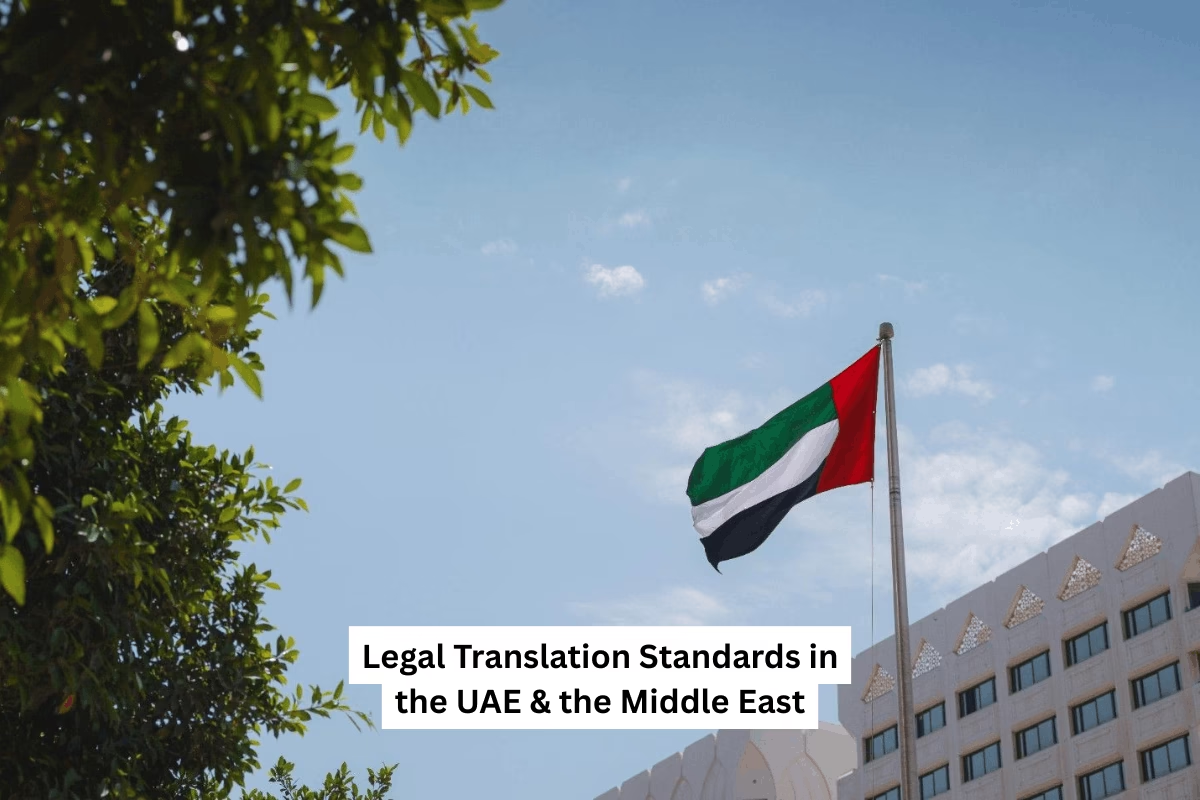
Expanding to the Middle East? Your Legal Documents Must Meet Local Translation Rules
When businesses or individuals submit legal documents in the United Arab Emirates and other Middle Eastern countries, translations must follow strict legal requirements. Courts and government authorities require documents that accurately preserve the meaning of the original content.
Legal translation ensures contracts, certificates, and court documents retain their legal meaning after translation. Translation errors can lead to rejected documents, delayed legal procedures, or compliance risks for businesses operating in international markets.
Why Legal Translation Requires Specialized Expertise
Legal documents contain complex terminology, clauses, and references that must remain precise across languages. Even small translation errors can change the legal meaning of a document.
Professional legal translators ensure the translated text remains accurate and legally valid for authorities reviewing the document.
Key reasons legal translation requires expertise
- Precise terminology – Legal terms must align with the legal system of the target country
- Clause accuracy – Contract clauses must preserve the original legal intent
- Regulatory compliance – Documents must meet court or government standards
Without specialized legal translators, documents may lose their legal validity.
Arabic Is the Official Legal Language in the UAE
In the United Arab Emirates, Arabic is the official language used in courts and most government institutions. Documents written in English or other languages usually require a certified Arabic translation before submission.
This requirement applies to several legal and administrative processes, such as:
- Court cases
- Immigration applications
- Company registration
- Contract submissions
Accurate Arabic translation helps authorities clearly review and process documents.
Common Documents That Require Legal Translation in the UAE
| Document Type | Purpose |
|---|---|
| Contracts and Agreements | Business partnerships, employment, or service agreements |
| Court Documents | Legal cases, supporting evidence, or court filings |
| Certificates | Birth, marriage, or academic certificates |
| Power of Attorney | Legal authorization documents |
| Business Registration Papers | Company formation and licensing |
A Practical Guide to Regulatory Legal Translation for Multinational Companies
Who Can Provide Certified Legal Translation in the UAE?
Legal translations must often be completed by translators licensed by the UAE Ministry of Justice.
Licensed translators are authorized to provide translations accepted by courts and government institutions.
Certified legal translation requirements
- Official translator certification
- Translator stamp and signature
- Certification statement confirming translation accuracy
These requirements ensure authorities legally recognize translated documents.
What Courts Look for in Legal Translations
Courts carefully review translated documents to ensure they match the original content.
Authorities such as Dubai Courts and the Abu Dhabi Judicial Department often require certified translations.
Key elements courts verify.
- Accuracy of legal terminology
- Consistency with the original document
- Translation of stamps and seals
- Preservation of document formatting and numbering
Maintaining both legal meaning and document structure is essential.
When Legal Translation Requires Notarization or Attestation
Certain legal documents must undergo additional verification after translation.
These steps confirm that the translated document is authentic and valid for official use.
Additional verification steps
- Notarization – Confirms the authenticity of documents
- Government attestation – Validates documents for official use
- Embassy legalization – Required for international document recognition
These processes are commonly required for immigration, education, and international business documentation.
Legal Translation Standards Across the Middle East
Many countries in the Middle East follow similar legal translation requirements.
Common requirements include:
- Certified translators
- Arabic translations for official documents
- Government or court approval
Countries where legal translation standards are widely enforced include:
- Saudi Arabia
- Qatar
- Kuwait
- Bahrain
Businesses operating across these markets must ensure their legal documents comply with regional translation standards.
Risks of Using Non-Certified Translators
Using translators who lack legal certification can create serious issues.
Common risks include
- Document rejection by authorities
- Misinterpretation of legal clauses
- Delays in legal or immigration procedures
- Compliance risks for international businesses
Certified legal translators help reduce these risks and ensure documents meet official standards.
How Professional Legal Translation Services Ensure Compliance
Professional translation providers use structured processes to maintain legal accuracy.
Key practices include
- Specialized legal terminology usage
- Multi-step quality checks and proofreading
- Secure handling of confidential documents
- Certification by authorized translators
These practices ensure translated documents comply with legal standards in the UAE and across the Middle East.
Conclusion
Legal translation ensures documents are accurately understood and accepted by authorities. In the United Arab Emirates and across the Middle East, compliance with translation standards is required for court submissions, immigration applications, and international business operations.
Working with certified legal translators ensures documents remain accurate, legally valid, and ready for official use—helping businesses and individuals avoid delays and legal complications.
FAQs
Is legal translation mandatory for UAE courts?
Who can provide certified legal translation in the UAE?
How long does legal translation take?
What documents usually require legal translation?
Need Certified Legal Translation for UAE Courts?
Our legal translators provide accurate and certified translations accepted by courts and government authorities in the UAE and across the Middle East.