
- About
- Services
- Translation
- Transcription
- Subtitling
- Interpretation
- Languages
- Blog
- Contact Us
- Request a Quote

Lip-Sync Dubbing vs. Voice-Over Dubbing: Which Does Your Content Need?
December 15, 2025
info@ananenterprises.com
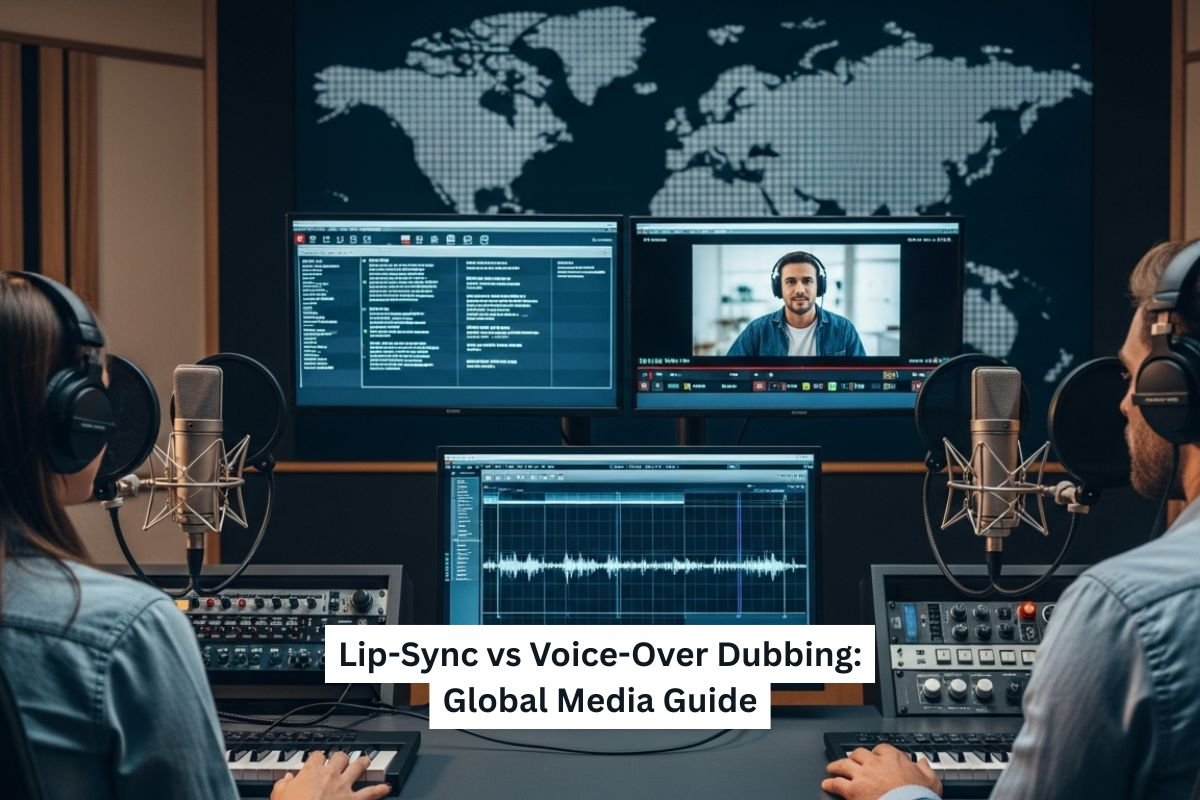
Global Media Success Starts with the Right Dubbing
Going global? OTT, films, streaming, or YouTube—dubbing is how your story speaks to the world. Viewers want audio that feels seamless, not jarring.
But choosing between lip-sync dubbing and voice-over dubbing trips up even seasoned creators. The wrong pick can kill immersion, hurt credibility, and tank engagement.
From budget to audience expectations, here’s everything you need to choose the right dubbing.
What Is Lip-Sync Dubbing?
Definition
Lip-sync dubbing matches translated dialogue to the speaker’s mouth movements, timing, and emotions. It’s more than translation—it’s performance in sync.
Key Characteristics
Lip-sync dubbing involves:
- Precise dialogue synchronization
- Script adaptation to fit mouth movements
- Emotional and cultural accuracy
- Professional voice actors and dubbing directors
The goal is simple: make the dubbed version feel like the original.
Ideal Content Types
Lip-sync dubbing works best for:
- Movies and feature films
- TV and web series
- High-budget OTT content
- Narrative-driven storytelling
- Animation (with stylized synchronization)
What Is Voice-Over Dubbing?
Definition
Voice-over dubbing adds translated dialogue over the original audio, prioritizing clarity over exact lip-sync.
Key Characteristics
Voice-over dubbing is known for:
- No strict lip synchronization
- Faster production timelines
- Lower production costs
- Neutral, informative delivery
It prioritizes clarity over performance.
Ideal Content Types
Voice-over dubbing works best for:
- Documentaries
- Educational and eLearning videos
- Corporate communications
- Interviews and expert talks
- Reality formats where realism matters more than sync
Lip-Sync Dubbing vs. Voice-Over Dubbing
| Factor | Lip-Sync Dubbing | Voice-Over Dubbing |
|---|---|---|
| Production complexity | High | Low |
| Script adaptation | Extensive | Minimal |
| Voice actor skill | Performance-focused | Informational |
| Viewer immersion | Very high | Moderate |
| Cost | Higher | Cost-effective |
| Turnaround time | Longer | Faster |
| OTT platform fit | Ideal | Limited |
| YouTube fit | Optional | Common |
| Regional preference | LATAM, Spain, Germany | Europe (docs), Asia |
How to Choose the Right Dubbing Style?
Content Genre & Format
Start with one question: Is your content narrative-driven or informational?
- Fictional storytelling favours lip-sync
- Non-fiction content suits voice-over
Target Audience Expectations
Audience preference varies by region:
- Lip-sync preferred: Spain, Germany, LATAM
- Voice-over or subtitles preferred: Nordic countries, Eastern Europe, Japan
Ignoring these expectations can hurt viewer retention.
Distribution Platform Requirements
- OTT platforms demand high sync accuracy
- Broadcast TV follows strict QC guidelines
- YouTube allows more flexibility
Platform standards should guide your choice.
Budget & Timeline
- Lip-sync dubbing requires more time and investment
- Voice-over dubbing offers faster, scalable production
Brand Identity & Quality Standards
Premium brands prioritize emotional fidelity. Informational brands focus on clarity and speed.
When Lip-Sync Dubbing Is the Best Choice?
Choose lip-sync dubbing when your content is:
- Emotionally rich
- Character-driven
- Story-focused
- Designed for immersive viewing
Example: A thriller series on an OTT platform requires lip-sync dubbing because viewer immersion depends on emotional precision and performance authenticity.
When Voice-Over Dubbing Is the Better Option?
Voice-over dubbing works best when:
- Content is factual or instructional
- Authenticity matters more than performance
- Timelines are tight
- Budgets are limited
Example: Voice-over lets YouTube documentaries flow naturally while keeping the original audio audible.
Hybrid Dubbing: When One Style Isn’t Enough
Some formats benefit from combining both methods:
- News reports
- Travel shows
- Edutainment content
- Interviews embedded in narrative content
A hybrid approach improves context accuracy while maintaining viewer comfort.
What Influences Dubbing Costs?
Lip-Sync Dubbing Cost Factors
- Script adaptation and rewriting
- Lip-matching engineers
- Director supervision
- Multiple recording and mix passes
- Additional revisions
Voice-Over Dubbing Cost Factors
- Minimal script adaptation
- Faster recording sessions
- Single-pass audio mixing
Costs vary by language, talent, and platform—but complexity is the main driver.
Common Dubbing Mistakes to Avoid
Media companies often:
- Choose based on cost instead of content
- Ignore cultural viewing habits
- Use flat voice-over for emotional scenes
- Overlook OTT QC requirements
- Forget trailers, metadata, and promos
Each mistake reduces content impact.
How a Professional Localization Team Helps?
An experienced localization partner supports:
- Linguistic and cultural adaptation
- Voice casting by region
- Sync accuracy and performance direction
- Platform-specific sound engineering
- Final QC and delivery (stereo, 5.1, OTT specs)
Good dubbing goes unnoticed. Bad dubbing breaks immersion.
Final Take: Which Dubbing Style Does Your Content Need?
An experienced localization partner supports:
- Linguistic and cultural adaptation
- Voice casting by region
- Sync accuracy and performance direction
- Platform-specific sound engineering
- Final QC and delivery (stereo, 5.1, OTT specs)
Good dubbing goes unnoticed. Bad dubbing breaks immersion.
FAQs
What’s the difference between lip-sync and voice-over dubbing?
Which style is best for OTT content?
How do costs compare?
Can one video use both styles?
How do I choose the right style for my audience?
Reach global audiences with precision dubbing and end-to-end media localization
From lip-sync to voice-over dubbing, Anan Translations helps OTT platforms, production houses, and creators adapt content for global audiences.