

How Travel Website Localization Improves User Experience Across Cultures
January 9, 2026
info@ananenterprises.com
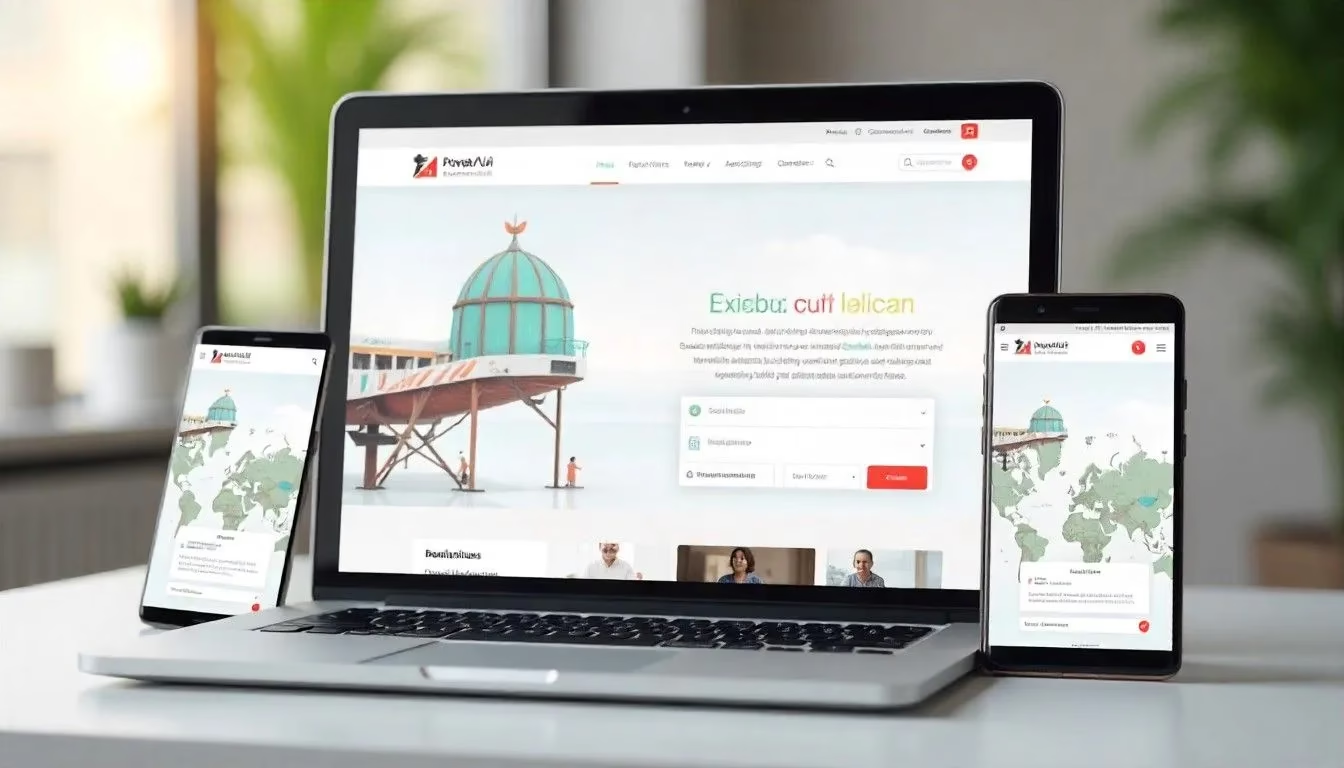
Introduction
Travel websites don’t just sell destinations. They sell trust, safety, and confidence. When users from different countries visit a travel website, they quickly ask one simple question: Can I trust this brand with my money and my travel plans?
This is why travel website localization matters more than simple translation. Translation changes the language. Localization improves the entire user experience (UX). It adapts content, structure, and interactions to match cultural expectations, browsing habits, and booking behaviour in each market.
In this article, we explain how travel website localization improves UX across cultures. We focus on navigation, trust signals, payment flows, and user expectations—areas most translation blogs fail to address in depth.
Why Travel Website Localization Matters for User Experience
Travel decisions are high-risk purchases. Users invest money, time, and safety in brands they may not know. Without proper UX localization, even an accurate translation can stop users from booking.
Why Translation Alone Fails to Deliver a Good Travel UX
Literal translation focuses on words, not behaviour. It doesn’t account for:
- How users scan pages
- What information do they expect to see first
- Which elements create reassurance
- How booking flows should feel
As a result, many travel websites look “foreign” even in the user’s native language—leading to hesitation and abandonment.
How User Experience Impacts Travel Booking Decisions Globally
User experience influences:
- Perceived brand credibility
- Ease of decision-making
- Booking confidence
- Willingness to complete payment
Localized UX removes uncertainty, helping users move smoothly from research to booking.
Travel UX Is Not Universal — Cultural Differences in Travel Website Behaviour
Different cultures interact with travel websites in different ways. Assuming one UX works for every market is a costly mistake.
How Cultural Preferences Influence Travel Website Navigation
For example:
- Some users prefer detailed information and structured menus
- Others expect simplified navigation with guided journeys
- Destination naming varies by region and language usage
Localization aligns navigation with regional browsing habits, making the website feel familiar instead of foreign.
Why Risk Perception and Trust Vary Across Travel Markets
Risk tolerance differs widely:
- European travellers often research extensively before booking
- Asian travellers may rely more on authority signals and recommendations
- Emerging markets prioritize payment security and clarity
Localized UX accounts for these differences, reducing anxiety at every step.
Travel Website Navigation Localization for Global Users
Navigation is one of the most overlooked aspects of travel website localization.
Common Navigation Mistakes in Multilingual Travel Websites
- Direct translation of menu labels
- Overcrowded or poorly structured menus
- Destination names that don’t match local search behavior
These issues frustrate users and increase bounce rates.
How Localized Navigation Improves Travel Website Usability
Effective navigation localization includes:
- Region-specific destination categories
- Locally familiar travel segments (family, religious, luxury, adventure)
- Language-appropriate menu hierarchy
- Intuitive user journeys
The result is faster discovery, better engagement, and higher booking intent.
Trust Signals in Localized Travel Websites
Users worry about:
- Payment security
- Cancellation policies
- Travel safety
- Brand legitimacy
Without clear trust signals, users hesitate—even if prices are attractive.
How to Localize Trust Badges, Reviews, and Certifications
Localization ensures trust elements are:
- Recognizable to the local audience
- Placed where users expect them
- Written in culturally appropriate reassurance language
Local review platforms, tourism authority logos, and region-specific certifications often convert better than global ones alone.
Payment Flow Localization in Travel Websites
Common issues include:
- Unexpected currency changes
- Missing local payment options
- Unclear refund or cancellation terms
- Foreign or unfamiliar checkout language
Each of these increases hesitation at the most critical moment.
Local Payment Methods and Currency Localization for Travel Websites
Effective payment localization includes:
- Displaying prices in local currency
- Supporting region-preferred payment methods
- Using familiar payment terminology
- Clearly explaining taxes, fees, and refunds
This transparency builds confidence and reduces abandonment.
Travel Content Localization and Cultural Expectations
Travel content must align with cultural context—not just language.
How Cultural Context Shapes Travel Content Preferences
Localized travel content reflects:
- Local holidays and travel seasons
- Climate expectations
- Safety considerations
- Cultural interests and values
Localization makes destinations feel relevant and appealing.
Localizing Tone, Imagery, and Messaging for Travel Websites
Tone and visuals matter:
- Some cultures prefer formal, informative language
- Others respond better to emotional storytelling
- Imagery should reflect what appeals locally—not globally
When messaging matches cultural expectations, users trust the brand more and engage more.
Mobile Travel Website Localization and UX Optimization
Mobile behavior varies significantly across regions.
Mobile UX Differences Across Global Travel Markets
- Some markets are entirely mobile-first
- Others use mobile mainly for research
- Payment and navigation expectations differ
Ignoring these differences leads to poor mobile conversion.
Optimizing Mobile Booking Experiences Through Localization
Mobile localization focuses on:
- Thumb-friendly navigation
- Fast load times
- Local mobile payment solutions
- Simplified booking steps
This creates a smooth experience on smaller screens.
UX Metrics That Improve with Travel Website Localization
Localization delivers measurable UX and business benefits.
Key Performance Indicators Impacted by Localized UX
- Lower bounce rates
- Longer session durations
- Higher booking completion rates
- Reduced cart abandonment
How Better UX Leads to Higher International Travel Bookings
When users feel confident, they are more likely to book.
Travel Website Translation vs Localization — UX Comparison
| Aspect | Translation | Localization |
|---|---|---|
| Navigation | Literal | User-intuitive |
| Trust Signals | Generic | Locally relevant |
| Payments | Limited | Region-specific |
| Conversion | Low | High |
Localization transforms the user experience, not just the language.
Travel Website Localization Checklist for Global Expansion
Before entering a new market, ensure:
- Language and cultural research is complete
- Navigation is regionally intuitive
- Trust elements are locally relevant
- Payment methods match user preferences
- Content tone and imagery are adapted
- Native users test UX
Conclusion — How Travel Website Localization Creates Better User Experiences
A well-localized travel website increases trust and makes navigating your site easier across cultures. Focus on UX, and global travellers will convert.